注: 建议图片大小150px*50px
Views: 0 Author: Site Editor Publish Time: 2026-09-01 Origin: Site
Procuring large-scale direct-view LED infrastructure represents a high-stakes capital expenditure for any facility upgrade. A misaligned vendor choice directly results in escalating maintenance demands, rapid diode degradation, and complex integration failures on the job site. Procurement teams and system integrators frequently struggle to separate marketing claims from actual manufacturing capabilities, supply chain stability, and post-sale Service Level Agreements. Navigating the global market requires evaluating vendors on pure technical merit. You must analyze R&D depth, proprietary versus open-architecture control systems, and proven reliability in specific deployment environments. This technical evaluation guide breaks down the top global manufacturers based on engineering capabilities and application suitability. We detail hardware architectures and environmental deployment requirements to help you select the ideal partner for your upcoming installation.
Application Dictates the Vendor: No single LED display manufacturer excels across all verticals. The ideal partner for a broadcast control room (fine-pitch) differs entirely from the optimal vendor for an outdoor sports stadium (high-brightness, weather-rated).
Control Ecosystems Matter: Buyers must decide between manufacturers enforcing proprietary control ecosystems (e.g., Samsung, LG) and those utilizing universal processing standards (e.g., NovaStar, Brompton, Linsn).
Supply Chain Transparency is Critical: A reliable LED display supplier must demonstrate control over their diode sourcing (e.g., Nationstar, Kinglight) and PCB manufacturing to guarantee batch consistency.
Global Manufacturing vs. Local Support: While the majority of top-tier manufacturing occurs in technology hubs like Shenzhen, China, the viability of a vendor hinges on their localized support infrastructure in Europe, North America, and other key regions.
Selecting a reliable hardware partner requires looking beyond specification sheets. You must evaluate the underlying manufacturing infrastructure. A vendor's internal quality control processes directly dictate the longevity of your display network. We define the core success criteria below.
Assess whether the vendor outsources assembly or owns their surface-mount technology (SMT) lines. In-house SMT ensures strict quality control over diode binning. Binning consistency guarantees uniform color reproduction across the entire canvas. Manufacturers with vertical integration control the exact placement of diodes onto the printed circuit boards (PCBs). High-speed SMT machines paired with automated optical inspection (AOI) catch soldering defects before the modules leave the assembly line. This reduces cold solder joints and minimizes dead pixels upon delivery.
A trustworthy commercial display manufacturer openly discloses their component supply chain. Buyers must verify the quality of the internal components. You should identify the LED chip providers, such as Nationstar, Kinglight, or Cree. You must also evaluate the driver ICs. High-performance driver ICs from brands like Macroblock or Chipone ensure high refresh rates and superior grayscale performance at low brightness levels. Reliable power supplies from Mean Well or similar brands prevent catastrophic cabinet failures during power surges.
Evaluate the presence of regional technical support and localized spare parts inventory. Guaranteed response times for dead-pixel repairs are critical for mission-critical environments. A strong regional footprint remains non-negotiable for enterprise SLAs. If a module fails, shipping replacements from overseas factories causes unacceptable downtime. Local repair facilities equipped with specialized diode soldering stations are mandatory. A competent LED display supplier will stock spare modules from your exact production batch in a regional warehouse.
Verify adherence to strict electromagnetic compatibility (EMC) standards. Commercial installations demand rigorous compliance with FCC Part 15 Class A or Class B regulations, depending on the environment. Fire retardancy ratings, such as UL 94 V-0, are legally required in many indoor public spaces. Manufacturers must provide verifiable testing certificates from independent laboratories like ETL or TÜV Rheinland. Failure to secure these certifications halts projects during the final building inspection.
Professional procurement requires auditing the vendor's aging test protocols. Look for a minimum of 72 hours of continuous white-screen operation before shipping. The factory must utilize advanced color calibration equipment to ensure uniformity across all cabinets. Strict clean-room standards prevent dust contamination during the COB (Chip-on-Board) or SMD (Surface-Mounted Device) packaging processes. Request detailed factory audit reports, including vibration testing and thermal chamber results, before awarding any contract.
The global market features a mix of premium consumer brands and specialized visualization engineering firms. Each manufacturer targets specific verticals. We evaluate the top eight contenders based on their technical strengths and ideal deployment scenarios.
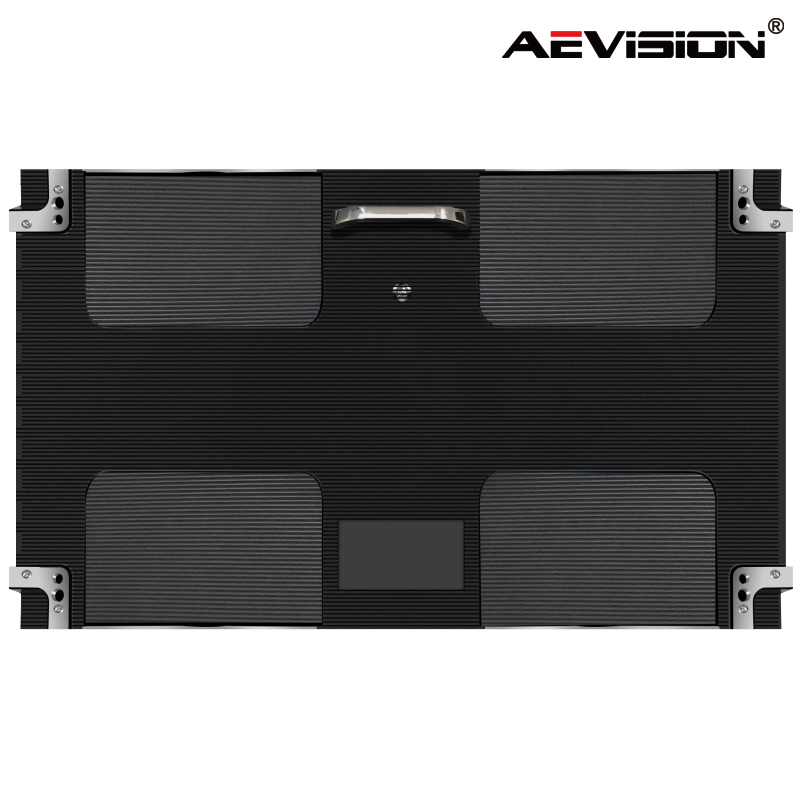
Established in 2008 and headquartered in Guangzhou, China, AEVISION designs and manufactures commercial display products, including fine-pixel LED displays, LCD video walls, interactive flat panels, CCTV monitors, and digital signage. As an LED display manufacturer, the company integrates product development, manufacturing, and quality management within a production facility covering more than 10,000 square meters.
Its LED display range includes modular solutions for indoor and outdoor large-screen installations, with pixel pitches ranging from P0.9 to P4. Available features include high refresh rates, front maintenance, dual data backup, and lightweight die-cast aluminum cabinets. These systems can be used in command centers, conference rooms, transportation facilities, security environments, exhibitions, and other large-format visualization projects.
AEVISION may be considered by distributors, system integrators, contractors, and project owners seeking a customized LED video wall solution. Before confirming a project, you should compare the required pixel pitch, viewing distance, screen dimensions, brightness, installation structure, control system, maintenance access, certification, and after-sales support for your target market.
Samsung dominates the premium corporate and high-end residential markets. They leverage their massive global electronics infrastructure to push display boundaries. Their focus remains on ultra-premium, high-resolution indoor environments where visual perfection is required.
Their technical strength lies in industry-leading MicroLED technology, specifically The Wall series. Samsung utilizes proprietary Black Seal technology to deliver exceptional black levels and protect diodes from physical impact. Deep integration with the Tizen digital signage ecosystem ensures exceptional image processing. AI upscaling algorithms enhance lower-resolution content seamlessly, making standard HD feeds look crisp on massive 4K or 8K canvases.
Executive boardrooms, flagship retail stores, and premium enterprise lobbies represent their ideal use cases. Their highly proprietary ecosystem limits third-party processing flexibility. You must operate within their specific software and hardware boundaries, which complicates integration with legacy AV control systems.
LG operates as a major commercial display brand with a strong foothold in enterprise and hospitality sectors. They compete directly with Samsung in the premium indoor space. LG focuses heavily on streamlining the physical installation process for integrators.
The MAGNIT series showcases robust MicroLED capabilities. LG pairs this hardware with seamless webOS integration. They design cable-less, modular cabinets utilizing board-to-board connectors. This engineering choice accelerates installation timelines and reduces points of failure between modules. Their Alpha processor delivers excellent color accuracy and motion smoothing.
Corporate communications, broadcast backdrops, and high-end digital networks fit LG perfectly. Similar to Samsung, LG leans heavily into its proprietary software environment. This approach complicates mixed-fleet deployments if you use different display brands across your facility.
Leyard pioneered ultra-fine pixel pitch LED technology. They dominate control room environments and critical viewing applications. Their engineering focuses on absolute reliability and continuous 24/7 operation in high-stakes environments.
They deliver exceptional redundant power and data architectures. If a primary data cable fails, the secondary line takes over instantly without visual interruption. Advanced MicroLED and MiniLED R&D pair with highly customizable cabinet configurations. They offer off-board power supply options to remove heat and noise from the display surface, which is critical for quiet control rooms.
Mission-critical control rooms, broadcast studios, and government facilities demand Leyard's precision. The high engineering overhead means their systems might be over-specified for standard digital signage applications.
Unilumin operates as a high-volume global exporter. They maintain a highly diversified product portfolio and strong European and US market penetration. They scale manufacturing efficiently to meet massive global demand across multiple verticals.
They excel in rapid deployment rental and staging cabinets. Their touring panels feature carbon fiber frames, advanced locking mechanisms, and wind-load resistance. Strong partnerships with top-tier processing brands like Brompton ensure premium performance for on-camera applications. They provide highly reliable LED display solutions for both permanent installations and temporary live events.
Live events, virtual production stages, and broad commercial networks utilize Unilumin extensively. Their massive product catalog requires careful navigation. You must ensure the selected series matches your specific project durability requirements.
Daktronics remains the undisputed leader in large-scale outdoor and sports stadium displays. Based in the United States, they engineer displays to survive the harshest environmental conditions on the planet.
They offer unmatched IP68+ weatherproofing. Their modules withstand direct water impact, salt fog, and extreme temperature fluctuations. They utilize heavy-duty silicone potting and aluminum louvers to protect the diodes and enhance contrast in direct sunlight. Proprietary Show Control systems handle live sports scoring and video playback seamlessly. They maintain rigorous US-based manufacturing and localized support teams.
Professional sports arenas, highway message signs, and massive architectural outdoor displays require Daktronics hardware. They place less focus on ultra-fine pitch indoor corporate applications compared to their competitors.
Barco is a premium visualization specialist. They focus entirely on critical viewing environments where visual artifacts are unacceptable. Their engineering prioritizes ergonomic viewing for operators staring at screens for extended shifts.
The Infinipix processing platform delivers unparalleled color accuracy and grayscale performance. They enforce strict adherence to ergonomic viewing standards. Their TruePix platform ensures perfectly flat installations with automated alignment mechanics. This eliminates mechanical seams between cabinets and compensates for slight wall imperfections.
High-end security operations centers, network operations centers, and premium corporate visualization rely on Barco. Their solutions target the premium tier rather than volume commercial deployments.
Absen is one of the largest export-driven manufacturers globally. They are known for reliability, scale, and a massive global distribution network. They standardized the commercial LED market with highly dependable product lines.
Highly standardized, reliable product lines define their catalog. The Acclaim series remains an industry staple for corporate installations. Excellent regional warehousing and strong rental durability make them a highly dependable partner. They maintain robust local support teams in major western markets, ensuring rapid parts replacement.
Corporate auditoriums, retail chains, and touring live events fit Absen perfectly. They focus on mass-market standardization over highly bespoke, custom engineering projects.
Manufacturer | Core Technical Architecture | Primary Environment | Serviceability Focus | Control Ecosystem |
|---|---|---|---|---|
AEVISION | Fine-Pitch Modular LED & Dual Data Backup | Command Centers / Conference / Transportation | Full Front Service | Project-Configured |
Samsung | Flip-chip COB & AI Upscaling | Premium Corporate / Retail | Front Service | Proprietary (Tizen) |
LG | Cable-less Board-to-Board | Enterprise / Broadcast | Front Service | Proprietary (webOS) |
Leyard | Redundant Power/Data | Control Rooms (24/7) | Front/Rear Options | Open / Proprietary Mix |
Unilumin | Carbon Fiber Touring Frames | Live Events / XR Stages | Rear/Front Hybrid | Open (Brompton/NovaStar) |
Daktronics | Silicone Potted IP68 Modules | Outdoor Sports / Highway | Rear Service Heavy | Proprietary (Show Control) |
Barco | Automated Z-Axis Alignment | Security / Network Ops | Front Service | Proprietary (Infinipix) |
Absen | Standardized Die-Cast Aluminum | Corporate / Mass Retail | Front/Rear Options | Open (NovaStar) |
Beyond the top eight volume leaders, several specialized manufacturers dominate specific technical niches. These companies engineer highly targeted solutions for complex deployment scenarios.
ROE Visual operates as a subsidiary of Unilumin. They represent the absolute gold standard for Virtual Production and XR stages. They dominate the high-end film and broadcast rental market. Their GhostFrame technology allows multiple cameras to capture different content on the same screen simultaneously. They integrate flawlessly with Brompton processing to eliminate on-camera moiré, scan lines, and color banding during complex visual effects shoots.
INFiLED is a highly versatile custom display manufacturer. They excel in creative, flexible, and lightweight rental solutions. Their curving mechanisms allow for seamless convex and concave screen deployments, typically ranging from -15 to +15 degrees per cabinet. They dominate the European and global staging markets where creative set design requires non-standard cabinet shapes and transparent touring screens.
Chainzone operates as a specialized leader in Intelligent Transportation Systems (ITS). They build highly durable highway variable message signs (VMS). Their displays meet strict EN12966 transportation department regulations for visibility, optical louver design, and extreme weather resilience. They focus purely on traffic management and industrial outdoor applications, utilizing specialized optical lenses over individual diodes to direct light precisely toward oncoming drivers.
Matching the correct hardware specification to your physical environment prevents premature system failure. You must categorize your project accurately before evaluating specific cabinet models.
Indoor fine-pitch environments require high refresh rates and flawless low-brightness grayscale performance. Viewers sit close to the screen, making dead pixels highly visible. Seamless mechanical alignment is mandatory. You must utilize precision CNC-machined cabinets. COB technology is increasingly preferred here for its durability and smooth surface, which prevents damage during installation. Leyard, Barco, and Samsung typically provide the best fit for these demanding environments.
Outdoor applications demand high brightness exceeding 7,000 nits to compete with direct sunlight. UV resistance prevents the plastic masks from degrading and shifting color over time. Robust thermal dissipation is critical, as the sun bakes the front of the screen while internal components generate heat. IP65 or IP68 sealing protects against moisture and dust. Daktronics and Unilumin lead this rugged category with heavy-duty aluminum chassis designs.
In-camera visual effects require specific technical parameters. The screen must feature ultra-high refresh rates, typically 7680Hz, to sync with cinema cameras. Wide color gamuts matching the DCI-P3 standard ensure accurate color reproduction. Complete compatibility with Brompton processing is usually required by technical directors to manage frame remapping and genlock. ROE Visual and Absen provide optimal solutions for sound stages.
Architectural integration often requires non-standard geometric cabinets. You may need flexible PCBs to wrap around structural columns. Transparent LEDs allow natural light to enter a building while displaying content outward. A specialized manufacturer must engineer custom mounting frames and unique module shapes to fit the architectural vision. INFiLED and Leyard excel in these highly customized, creative deployments.
Selecting a vendor requires balancing technical trade-offs. You must evaluate the control architecture, physical maintenance requirements, and the logistical realities of global shipping.
Proprietary systems offer plug-and-play simplicity. The manufacturer controls both the hardware and the software, ensuring smooth integration. However, this risks vendor lock-in. You cannot easily swap processing gear later. Open architectures utilize universal controllers like NovaStar COEX, Brompton Tessera, or Linsn. This approach allows for easier future upgrades. You can mix hardware from different manufacturers on the same network using a unified control platform.
You must determine whether your installation requires front-serviceable or rear-serviceable cabinets. Front-serviceable designs allow technicians to extract modules using magnetic suction tools from the viewing side. This is mandatory for wall-mounted screens with no rear access. Rear-serviceable cabinets require a catwalk or physical space behind the screen. This choice dictates the structural framing required and impacts the labor associated with swapping dead modules.
Heat is the primary enemy of LED longevity. Advanced driver ICs and common cathode designs significantly reduce heat output. Efficient thermal dissipation extends the lifespan of the diodes. It also reduces the load on your facility's HVAC systems. Die-cast aluminum cabinet chassis dissipate heat much faster than traditional extruded magnesium or plastic housings. Evaluate the thermal footprint of the cabinet before finalizing the specification.
You must factor in shipping timelines and import logistics from Asian manufacturing hubs. Ocean freight adds weeks to a project timeline. Prolonged downtime becomes a major risk if local spare parts remain unavailable. Ensure your chosen LED display manufacturer maintains a regional warehouse fully stocked with spare modules from your exact production batch.
Large-scale display deployments carry inherent technical risks. Proactive mitigation strategies ensure a smooth installation and stable long-term operation.
Diodes manufactured on different days exhibit slight color variations. Mixing batches results in a patchwork appearance on the final screen. Mandate that all panels for a single project come from the exact same diode bin. Request factory calibration reports before shipment. Purchase a 5% overage of spare modules from that specific batch to ensure future repairs match perfectly.
Sub-millimeter pixel pitches require absolute structural perfection. A wall that is slightly out of plumb will cause visible seams between cabinets. Utilize precision CNC-machined cabinets. Hire certified integrators experienced in fine-pitch alignment. They must use laser levels and custom Z-axis adjustment brackets to ensure a perfectly flat canvas.
Video processing introduces delay. In a live event or broadcast, this latency causes lip-sync issues between the screen and the live audio. Specify low-latency controllers. Ensure the entire signal chain supports genlock synchronization. This locks the display refresh rate to the camera shutter, eliminating visual tearing and minimizing processing delay.
Large LED walls draw massive amounts of power upon startup. This inrush current easily trips standard circuit breakers. Implement staggered power-on sequencing via smart power distribution units (PDUs). Distribute the load across a 3-phase power system to ensure stable voltage delivery to all cabinets during peak brightness output.
Choosing an LED display manufacturer should begin with your project conditions rather than brand recognition alone. You should compare structural load capacity, available power, viewing distance, pixel pitch, brightness, cabinet design, and maintenance access before selecting a system. When possible, request a physical demonstration using your own content to evaluate color consistency, motion, fine details, and grayscale performance at lower brightness levels.
Long-term support is equally important. Confirm the recommended quantity of spare modules, power supplies, and receiving cards, and ask whether replacement modules can be matched to the original production batch. You should also review the manufacturer’s warranty process, technical response time, repair capabilities, and service coverage in your market.
No single manufacturer is suitable for every LED display project. The right choice depends on how well its products, engineering support, and service model match your installation. AEVISION provides modular LED display solutions for different commercial and large-format applications. If you require a customized configuration, you can contact AEVISION to discuss your screen dimensions, pixel pitch, installation environment, and technical requirements.
A: Surface-Mounted Device (SMD) packages individual LED chips onto a printed circuit board. Chip-on-Board (COB) bonds the LED chips directly to the board, covering them in a protective resin. COB offers superior durability, higher contrast, and better protection against moisture and physical impact.
A: Divide your minimum viewing distance in meters by one. If your audience sits three meters away, a 3mm pixel pitch or lower provides a seamless image without visible pixels. Closer viewing requires a finer pitch.
A: A high refresh rate prevents visible flickering when the screen is recorded on camera. Broadcast and virtual production environments typically require refresh rates of 3840Hz or 7680Hz to ensure smooth playback and eliminate on-camera scan lines.
A: Yes. High-quality outdoor displays feature IP65 or IP68 ratings, sealing the internal components against dust and heavy rain. They utilize advanced thermal management and heavy-duty aluminum chassis to operate in extreme heat or freezing temperatures without failure.
A: Front-serviceable cabinets allow technicians to remove and replace LED modules, power supplies, and receiving cards from the front of the screen using specialized magnetic tools. This design eliminates the need for rear access space, making it ideal for flat wall-mounted installations.
A: Common cathode technology supplies separate, precise voltages to the red, green, and blue LED chips. Traditional designs supply a single high voltage to all chips, burning off excess energy as heat. Separating the power drastically reduces thermal output and extends diode life.