 注: 建议图片大小150px*50px
Views: 0 Author: Site Editor Publish Time: 2025-11-03 Origin: Site
A CCTV monitor, or Closed-Circuit Television monitor, is the specialized display screen that serves as the visual endpoint in a security camera system. Unlike a regular television that broadcasts signals for public reception, a CCTV monitor displays video from a private, closed-circuit network of cameras, providing real-time observation and recorded evidence for security and surveillance purposes . Acting as the "eyes" for security personnel, these monitors are fundamental components in settings ranging from commercial buildings and public transportation to retail stores and industrial facilities, playing a crucial role in crime prevention, safety monitoring, and post-incident investigation .
The term "CCTV monitor" is often used interchangeably with "monitoring display" or "surveillance screen," but its function is distinctly professional. At its core, it is the terminal device that converts video signals from cameras into viewable images on a display terminal . The "closed-circuit" part of the name signifies that the video signal is not openly transmitted; it is contained within a dedicated system, connecting the cameras directly to the monitors and recording devices, ensuring privacy and control .
These monitors have evolved significantly from their origins. The journey began with bulky CRT (Cathode Ray Tube) monitors, which, while bright and inexpensive, were deep, heavy, and energy-inefficient . The industry then transitioned to LCD (Liquid Crystal Display) technology, which offered a slimmer profile, lower power consumption, and an image free of flicker . Today, LCD monitors are the undisputed mainstream, with ongoing advancements in LED backlighting and IPS panels that deliver superior brightness, wider viewing angles, and enhanced color accuracy, making them ideal for the demanding task of continuous surveillance .
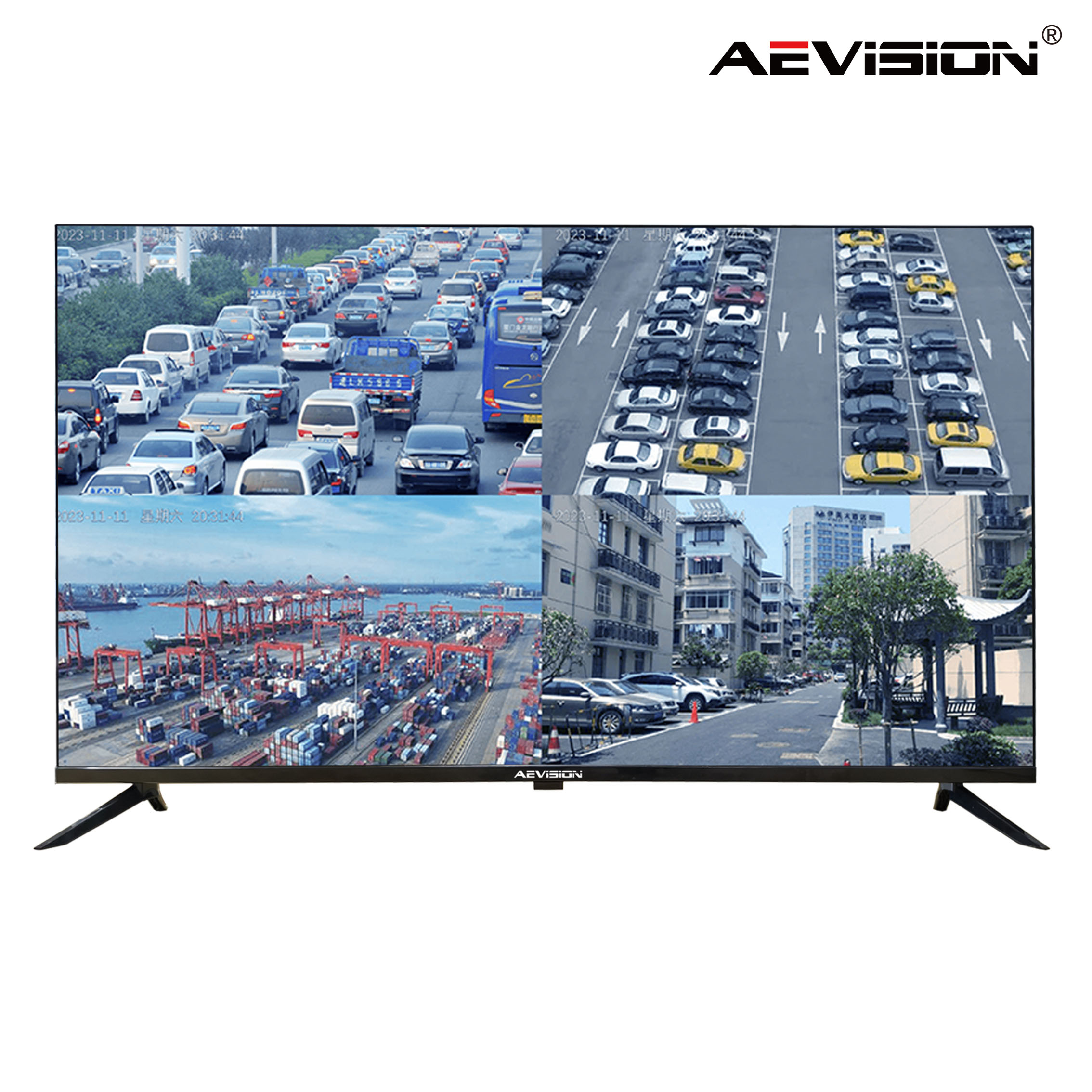
Selecting the right CCTV monitor requires a deeper understanding of its technical attributes than a standard TV. These specifications determine the clarity, reliability, and suitability of the monitor for a specific surveillance environment.
Screen Size and Viewing Comfort: Monitors come in various sizes, typically measured diagonally in inches. Choosing the correct size depends on the viewing distance and the number of video feeds displayed. A larger display screen is essential for control rooms where operators need to see multiple camera views simultaneously or scrutinize fine details from a distance .
Resolution and Image Clarity: Resolution defines the number of pixels that make up the image. A higher resolution, such as Full HD (1080p) or 4K/UHD, means more pixels and a sharper, more detailed picture . This is critical for identifying key details like faces or license plates. The monitor's resolution should match or exceed the output of the connected cameras to ensure no detail is lost .
Brightness and Contrast Ratio: Brightness, measured in candela per square meter (cd/m²), determines how well the image is visible in brightly lit control rooms. A higher brightness level prevents the image from appearing washed out. The contrast ratio is the difference between the brightest white and the darkest black a monitor can produce. A high contrast ratio delivers a more dynamic image with better depth and clearer shadows, revealing details that might be hidden in darker areas of the video feed .
Viewing Angles: This specification indicates the maximum angle at which the screen can be viewed without significant loss of color or contrast. Modern LCD monitors with IPS technology offer wide viewing angles of 178 degrees or more, ensuring the image remains accurate for personnel viewing the screen from the side .
Response Time: Response time is how quickly a pixel can change from one color to another, measured in milliseconds (ms). A slower response time can cause motion blur or ghosting in fast-moving scenes. For monitoring areas with high activity, a faster response time (e.g., 8ms or lower) is desirable to ensure smooth and clear video playback .
Input Connectors and Compatibility: A professional CCTV monitor is equipped with specific input ports to connect directly to surveillance equipment. The most common is the BNC connector, used for analog video signals. Modern monitors also feature HDMI and VGA ports for connecting to digital sources, DVRs, and NVRs . This variety ensures compatibility with both older and newer system components.
While they may look similar, a CCTV monitor and a consumer-grade television are built for fundamentally different purposes. Using a regular TV for 24/7 surveillance can lead to premature failure and inadequate performance. The differences are most apparent in three key areas, often referred to as the three "degrees" .
Table: CCTV Monitor vs. Regular Television
| Feature | CCTV Monitor | Regular Television |
|---|---|---|
| Primary Use | Professional, continuous surveillance | Consumer entertainment |
| Image Clarity | High; enhanced for detail and static images | Standard; optimized for dynamic broadcast content |
| Color Fidelity | High color reproduction accuracy for true-to-life colors | Enhanced saturation for visually appealing content |
| Operational Lifespan | Designed for 24/7 operation | Designed for intermittent use (a few hours daily) |
| Internal Components | Industrial-grade; higher tolerance for heat and stress | Consumer-grade; not suited for constant use |
| Housing | Often all-metal, shielded for EMC compatibility | Mostly plastic |
| Input Ports | BNC connectors, VGA, HDMI | HDMI, Antenna, Cable |
| Control | RS-232 for centralized control systems | Infrared remote control |
Image Clearness: Monitors are engineered with a wider video channel bandwidth, resulting in a sharper and more detailed image. This is crucial for discerning fine details in a surveillance feed, which might be lost on a standard television .
Color Reproduction: Accurate color reproduction is vital in security to correctly identify vehicles, clothing, and environmental elements. Monitors have precise circuits to ensure colors are displayed truthfully, whereas TVs often enhance colors for a more dramatic, but less accurate, visual effect .
Durability and Stability: This is the most significant difference. A CCTV monitor is built for 24/7 operation. Its components are designed to withstand constant electrical stress, heat, and demanding environments. They undergo rigorous aging processes, such as being run in high-temperature chambers for over 24 hours before leaving the factory. A regular TV, built for a few hours of daily use, would quickly succumb to these conditions, leading to a shortened lifespan and potential failure .
The market offers several types of CCTV monitors, each with strengths tailored to different applications. A data analysis of product types reveals how to match the monitor to the mission.
Table: Monitor Type Analysis
| Monitor Type | Best Suited For | Key Advantages | Key Disadvantages |
|---|---|---|---|
| LCD/LED Monitor | Nearly all applications (control rooms, retail, offices) | Slim, energy-efficient, long life, sharp image | Limited screen life, potential for dead pixels |
| CRT Monitor | Legacy analog systems (being phased out) | Low cost, wide viewing angle, high brightness | Very bulky, heavy, high power consumption, image flicker |
| Video Wall Display | Large control rooms (transportation, public safety) | Seamless, immersive display for many video feeds | High cost, complex installation and setup |
Application-Based Selection:
Commercial Security: For retail stores and offices, standard LCD monitors between 22 and 32 inches are common. Features like high contrast ratio and good color reproduction help in identifying shoplifters or monitoring customer flow.
Critical Infrastructure and Control Rooms: In settings like airports, power plants, and city traffic centers, reliability is paramount. Here, high-grade LCD monitors with 24/7 operation capabilities are standard. Large-format video wall displays are also used to create an integrated viewing experience of countless camera feeds .
Industrial and Harsh Environments: Manufacturing plants or outdoor areas may require monitors with specialized protective coatings to resist dust, moisture, and physical impact.
Proper installation and care are essential to maximize the service life of a CCTV monitor. This includes ensuring adequate ventilation to prevent overheating, using stable power sources, and configuring the input signal correctly for optimal resolution. For maintenance, regular cleaning of the screen with a soft, dry cloth is recommended. Avoid using screen savers, as they keep the pixels actively switching, which can contribute to screen aging. Instead, simply turn off the monitor when the system is not in use for extended periods .
The future of CCTV monitors is tied to broader technological trends. As camera technology advances with 4K resolution and HDR imaging, monitors will continue to evolve to display this richer data. We are also seeing a trend towards smarter display terminals with integrated analytics capabilities, where the monitor itself can highlight alerts or unusual activity within the video feed. Furthermore, the drive for energy efficiency will push the adoption of even more power-efficient LED backlighting and eco-friendly designs, ensuring that security does not come at an excessive operational or environmental cost.
Can I use a regular PC monitor for my CCTV system?
Yes, it is technically possible with the right adapters, as both use similar digital signal technology. However, PC monitors lack dedicated BNC connectors and are not designed for 24/7 operation, which can lead to a significantly shortened lifespan. A professional CCTV monitor is the more reliable and durable choice .
How many cameras can I connect to a single monitor?
You can connect a virtually unlimited number of cameras to a single monitor by using a Digital Video Recorder (DVR) or Network Video Recorder (NVR). The DVR/NVR acts as the central hub, and the monitor simply displays the processed video output, which can be shown in various layouts like single view, quad view, or a 16-way split screen .
What does "monitor resolution" mean for CCTV?
Monitor resolution refers to the number of pixels that create the image on the display screen. A higher resolution means a sharper and more detailed picture. For surveillance, this is crucial for being able to clearly see important details, such as a person's face or a car's license plate, especially when zooming in on recorded footage .
A CCTV monitor is far more than just a screen; it is a purpose-built professional tool designed for reliability, clarity, and continuous operation. From the compact TFT displays in a vehicle to the vast video walls in a security operations center, these monitors are the critical interface that transforms raw video data into actionable security intelligence. When planning or upgrading a surveillance system, giving the monitor the same careful consideration as the cameras ensures that every captured detail is seen with the clarity it deserves.
As a leader in the display technology sector, AEVISION leverages over 15 years of technical expertise to engineer robust visual solutions that meet the demanding needs of modern security operations. Our focus on innovation and quality ensures that our products deliver the performance and reliability that professionals depend on.


